 By admin
Watch the video at the end of this article.
Introduction
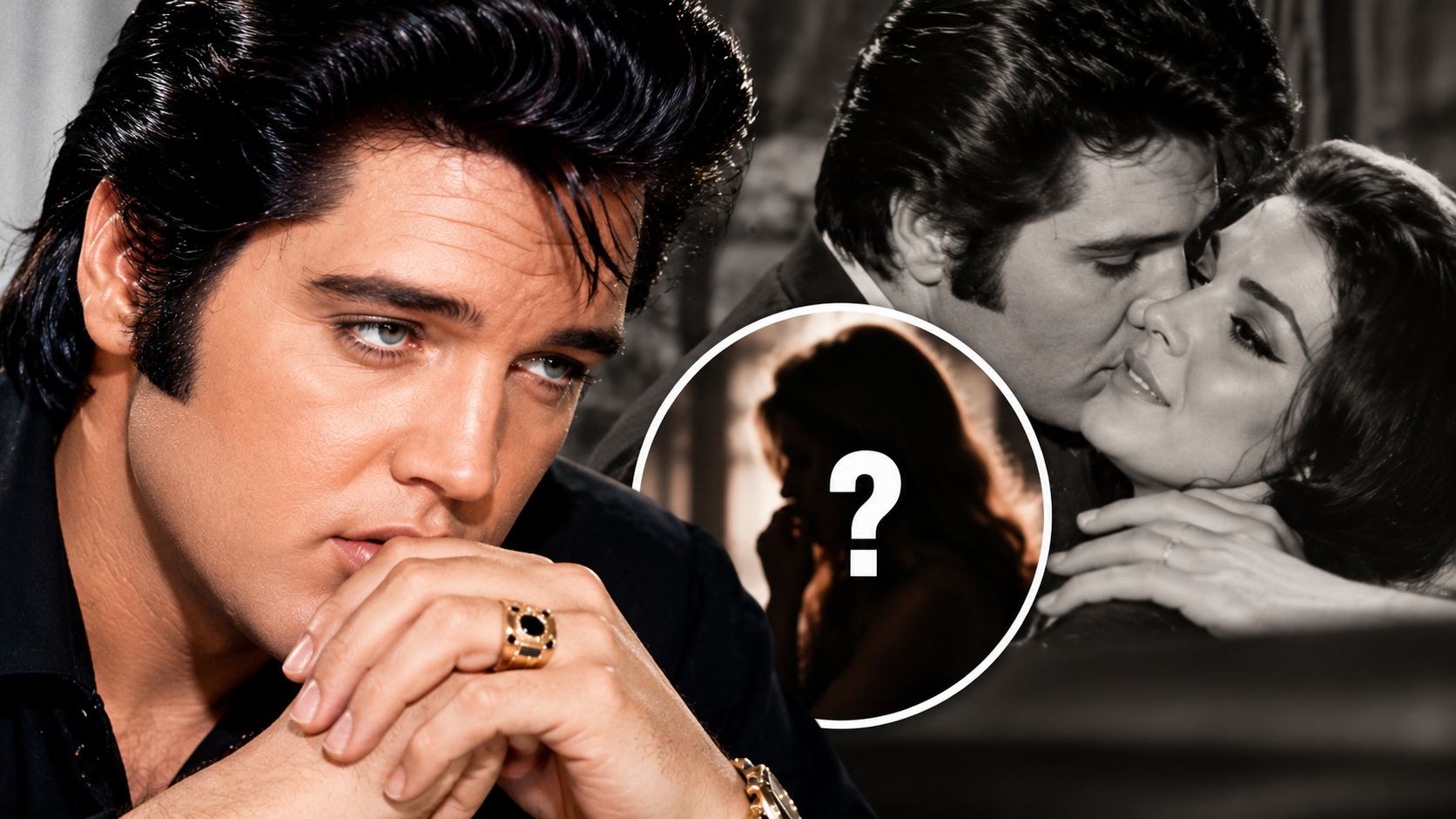
To millions of people around the world, Elvis Presley was the King of Rock and Roll—a m
an whose voice could fill concert halls, whose smile captivated audiences, and whose name became synonymous with fame and success. Fans saw the dazzling costumes, the unforgettable performances, and the extraordinary life of a superstar who seemed to have everything.
But beyond the stage lights and screaming crowds, Elvis lived a life that was much more complicated than the public image suggested.
Behind the gates of Graceland, there were family relationships, personal expectations, the pressures of worldwide fame, and struggles that could not simply disappear when the music stopped playing.
The world saw the King of Rock and Roll. But the man behind the crown was far more complicated than the legend many people remember.
His story was not just about fame and fortune. It was also about love, loneliness, responsibility, and the challenge of finding a private life when millions of people believed they knew you.
The Burden of Becoming a Legend
Elvis Aaron Presley was born on January 8, 1935, in Tupelo, Mississippi. His rise from a modest background to international superstardom transformed his life in ways few people could have imagined.
By the mid-1950s, his music and stage presence had made him one of the most talked-about entertainers in America. His popularity continued to grow through recordings, films, television appearances, and live performances.
But extraordinary success brought extraordinary expectations.
Every public appearance attracted attention. His personal relationships became subjects of public curiosity, while decisions about his career were often discussed by people who had never met him.
For Elvis, fame was not something he could easily switch off. Even ordinary activities could become complicated when the outside world was constantly interested in his whereabouts.
The image of the confident superstar was powerful, but it represented only one part of his life.
Behind that image was a person navigating the demands of a career that had become larger than almost anything he had experienced growing up.
Graceland: A Home Away From the Spotlight
In 1957, Elvis purchased Graceland in Memphis, Tennessee. The property became one of the most important places in his life, providing a private residence where he could spend time with family, friends, and members of his inner circle.
To fans, Graceland represented the glamour of celebrity. It was the home of a man who had achieved extraordinary success and become an international cultural icon.
Yet a home is more than its appearance.
Within Graceland, Elvis could listen to music, relax with people he trusted, and spend time away from the expectations attached to his public identity. His life there included familiar routines as well as the unusual circumstances that came with being one of the world’s most recognizable entertainers.
His family relationships were particularly important to him. His mother, Gladys Presley, had been a central figure in his early life, and her death in 1958 was a profound loss.
Elvis’s attachment to his family helps explain why his private world mattered so much, even as his professional life continued to expand.
Graceland was not simply a symbol of wealth. It was connected to his memories, relationships, and desire for a place where he could be himself.
Love, Marriage, and Complicated Relationships
Elvis’s romantic life became a major part of his public story, particularly his relationship with Priscilla Beaulieu, whom he met in Germany while serving in the U.S. Army.
They married in Las Vegas on May 1, 1967, and welcomed their daughter, Lisa Marie Presley, in February 1968.
From the outside, their relationship appeared to be a remarkable Hollywood-style romance. But the reality of maintaining a marriage under the pressure of celebrity was more complicated.
Elvis’s career demanded significant time and attention. His professional commitments, public profile, and personal expectations placed pressures on their relationship.
Priscilla later discussed their marriage and life at Graceland in her memoir, Elvis and Me, published in 1985. Her account offered readers a personal perspective on their relationship while also describing the difficulties that existed behind the public image.
The couple separated in 1972 and divorced in 1973. Despite the end of their marriage, they continued to share an important connection through their daughter.
Their story illustrates a reality that often gets lost in celebrity headlines: a relationship can contain affection, meaningful memories, and genuine difficulties at the same time.
Even a relationship surrounded by fame and admiration must face the same human challenges that affect people everywhere.
The Pressure of Living Under Constant Expectations
As Elvis’s career progressed, the demands surrounding him became increasingly complex.
His schedule involved recording sessions, film projects, concerts, and professional commitments. Decisions about his work could affect not only his own future but also the livelihoods of people working within his professional circle.
His manager, Colonel Tom Parker, played a major role in shaping his career, including his film work and touring commitments.
Elvis’s Hollywood years brought commercial success, but the volume and nature of his movie projects sometimes left him with limited opportunities to pursue the musical direction he wanted.
His 1968 television comeback special marked an important turning point, reconnecting him with the energy and musical identity that had first made him famous.
The special demonstrated that Elvis remained a compelling performer, capable of delivering intimate, energetic, and emotionally powerful music.
Yet the demands of his career continued beyond that moment.
His life was shaped by a constant negotiation between professional obligations, personal desires, and the expectations of an audience that wanted to see the King at his best.
The Personal Struggles Behind the Performances
Elvis’s later years were marked by serious health difficulties, and his use of prescription medications became an important part of the historical discussion surrounding his life and death.
These issues should not be reduced to sensational stories or simplified explanations. His circumstances were complex, and understanding them requires care when separating documented facts from speculation.
What is clear is that the final years of his life were difficult in important ways.
Despite those challenges, Elvis continued to perform for audiences who remained deeply devoted to him. His concerts could still create extraordinary moments of connection, and his voice continued to carry the emotional qualities that had made him famous.
For fans, seeing Elvis onstage could feel like witnessing something timeless. But the experience of performing did not reveal everything happening in his private life.
The contrast between public admiration and personal difficulty is one of the most significant aspects of his story.
A person can bring happiness to millions of people while facing challenges that the audience may never fully understand.
That truth does not diminish Elvis’s achievements. Instead, it reminds us that his legacy belongs to a real human being, not simply to an image preserved in photographs and recordings.
The Side of Elvis That Fans Rarely Saw
People who knew Elvis personally have shared many different recollections of his character.
Some described his humor, generosity, and love of entertaining the people around him. Others discussed the pressures associated with his fame and the difficulties that developed during different periods of his life.
These accounts offer valuable perspectives, but no single recollection can explain every aspect of his personality.
Like anyone else, Elvis could be understood differently by different people. His behavior and circumstances also changed throughout his life.
That is why it is important to approach stories about his private world with an open mind while distinguishing firsthand accounts from rumors.
The most revealing details are not always the most dramatic ones. Sometimes, they are the ordinary memories that show how a person interacted with friends, approached his work, or tried to find comfort away from public attention.
For an entertainer whose life was constantly discussed by strangers, those personal details can help restore a sense of humanity to his story.
The Final Chapter of a Complicated Life
Elvis Presley died at Graceland on August 16, 1977, at the age of 42.
The news shocked the world. Fans mourned the loss of an artist whose music had influenced generations, while questions about his health and final years became the subject of continuing discussion.
His death also changed the way people looked back on his life.
Earlier achievements were revisited, personal relationships received renewed attention, and stories from those who had known him became part of the effort to understand the man behind the legend.
But no single explanation can capture the entirety of Elvis’s experience.
His life included extraordinary success, meaningful relationships, professional disappointments, personal challenges, and a musical legacy that continues to endure.
Remembering him honestly means acknowledging these different dimensions rather than focusing exclusively on either the glamour or the tragedy.
Why Elvis’s Private Life Still Fascinates the World
Nearly five decades after his death, Elvis Presley remains one of the most recognizable figures in music history.
His songs continue to reach new listeners, Graceland welcomes fans from around the world, and his life remains a subject of documentaries, books, and conversations among generations of admirers.
Why does the fascination continue?
Perhaps it is because Elvis represents the contrast between the person the world sees and the person who exists away from public attention.
Fans remember the performer who could command an audience with a single song. But they also want to understand the experiences that shaped his decisions, relationships, and final years.
His story raises questions that extend beyond celebrity. How does a person protect their privacy when the world demands access? How can someone maintain meaningful relationships under constant public scrutiny? And what happens when the expectations attached to success become difficult to escape?
Elvis’s life cannot provide simple answers to these questions, but it offers a powerful historical example of the complexities that can accompany extraordinary fame.
Beyond the Crown, There Was a Human Being
Elvis Presley will always be remembered for his contributions to music. His distinctive voice, groundbreaking performances, and influence on popular culture secured his place in history.
Yet his legacy becomes more meaningful when we remember that he was more than the title of King of Rock and Roll.
He was a son who experienced profound loss, a husband whose marriage faced difficulties, a father to Lisa Marie, and an entertainer who lived under pressures most people will never experience.
His life was neither a perfect fairy tale nor simply a tragic story. It was a complicated human journey filled with achievements, relationships, disappointments, and moments that continue to invite reflection.
The world remembers Elvis Presley as a legend, but understanding the man behind the music means looking beyond the fame and acknowledging the complicated life he lived.
Perhaps that is why his story continues to resonate. The songs preserve his voice, the photographs preserve his image, and the memories shared by people who knew him offer glimpses into the private world behind the crown.
The King may be gone, but the questions his life raises—and the music he left behind—continue to bring people together.