 By admin
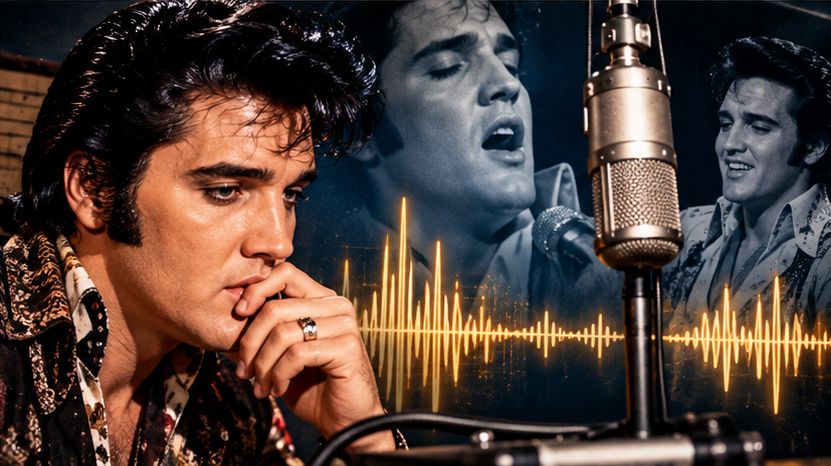
Watch the video at the end of this article.
Introduction
Decades after Elvis Presley first captivated the world, his voice remains instantly recognizable. A few notes are often enough for longtime fans to identify him, even before the song reaches its most memorable moment. His voice could sound tender and intimate one second, then powerful, rough, and full of emotion the next.
But what made Elvis sound so different from every other singer?
It was more than his unmistakable Southern accent or the songs he performed. It was the way he blended gospel, blues, country, and rhythm and blues into a style that felt entirely his own. Behind that remarkable sound was a combination of natural vocal ability, musical influences, and an instinct for turning a song into an emotional experience.
Elvis did not simply sing songs. He made people feel as though he had lived every word.
And that may be one of the biggest reasons his voice continues to captivate listeners decades after his death.
A Voice That Refused to Fit Into One Category
When Elvis emerged in the 1950s, popular music was changing rapidly. Country music had its traditions, gospel had its powerful vocal expressions, and rhythm and blues brought its own distinctive rhythms and emotional intensity.
Elvis drew inspiration from all these musical worlds.
Growing up in the American South, he encountered gospel music, including the sounds he heard in church, alongside the country and blues traditions that shaped the region’s musical culture. Those influences became important ingredients in his singing.
Listen to his recordings, and the differences become clear.
In one performance, Elvis could deliver a bright, energetic rock and roll vocal. In another, he could soften his tone, stretch a phrase, and create a sense of intimacy. His gospel performances revealed yet another dimension, with sustained notes and expressive phrasing that emphasized the emotional power of the music.
He was difficult to place in a single musical category because his voice connected several traditions.
That combination helped create a sound that was both familiar and surprising to audiences of his era.
The Secret Was in the Way He Used His Voice
One reason Elvis remains recognizable is his vocal versatility.
He could move between lower, warm tones and higher, more forceful notes. He could sing softly without losing emotional intensity, then build toward a dramatic climax that made a performance feel almost overwhelming.
His phrasing was equally distinctive.
Rather than delivering every line with the same rhythm, Elvis often varied the timing, emphasized particular words, and allowed certain notes to linger. These choices gave his performances a conversational quality, as though he were communicating directly with the listener.
His voice also carried a characteristic blend of smoothness and grit. Depending on the song, he could sound gentle, playful, urgent, or deeply vulnerable.
There was no single trick responsible for his sound. It emerged from the interaction of his vocal range, musical instincts, interpretation, and years of performing.
The remarkable thing about Elvis was not simply how high or low he could sing. It was how many different emotions he could express with the same voice.
Gospel Music Gave His Singing Another Dimension
To understand Elvis’s voice, it is important to recognize the influence of gospel music on his life and artistry.
Gospel was more than a musical style he occasionally explored. It was an important part of his musical background, and he returned to it throughout his career.
The genre offered a rich vocabulary of vocal expression: sustained notes, dynamic changes, expressive phrasing, and a powerful relationship between the singer and the emotion of the song.
Elvis brought many of these qualities into his other performances.
His gospel recordings, including “How Great Thou Art,” demonstrated his ability to build a song gradually, moving from restrained passages toward soaring, emotionally charged moments.
In songs such as “Crying in the Chapel,” listeners could hear a more reflective side of his artistry.
These performances revealed why Elvis could sound so different from one recording to another while remaining unmistakably himself.
His voice was not limited to one mood. It could communicate devotion, heartbreak, excitement, and tenderness with equal conviction.
The Blues and Country Influences Behind the Sound
Gospel was only one part of the story.
Country music contributed to Elvis’s melodic sensibility and phrasing, while blues and rhythm and blues helped shape the rhythmic energy and expressive character of his early recordings.
The combination was especially powerful in songs such as “That’s All Right,” which helped introduce listeners to his distinctive approach in the 1950s.
His interpretation did not sound like a straightforward copy of any one musical tradition. Instead, he brought different influences together and performed them through his own vocal personality.
That musical blending was part of what made his early recordings so exciting.
Elvis could deliver a rhythmic line with playful confidence, add a blues-influenced inflection, and then shift into a more melodic passage without making the performance feel disconnected.
His voice became a meeting point for different musical traditions.
And because those influences were woven into his natural approach to singing, his style continued to evolve as his career progressed.
Why His Voice Could Break Your Heart
Some of Elvis’s most memorable performances are not his loudest or most energetic ones.
They are the songs in which he allows emotion to take the lead.
Consider “Can’t Help Falling in Love.” Its gentle melody and restrained delivery create an atmosphere of tenderness. Elvis does not need to overpower the arrangement to communicate the feeling behind the lyrics.
Then there is “In the Ghetto,” where his controlled vocal delivery helps tell a serious and moving story.
In “If I Can Dream,” his voice grows increasingly powerful as the song develops, conveying urgency and hope.
These performances reveal an essential part of his appeal: he understood that singing is not only about producing the right notes. It is also about interpreting the meaning of a song.
His changes in volume, tone, timing, and emphasis helped make the lyrics feel personal.
For listeners, that emotional connection can be difficult to explain. A particular phrase may bring back a memory, while a sustained note can create a feeling that remains long after the music ends.
Sometimes, the voice we remember most is the one that makes us feel understood without saying a word directly to us.
His Voice Changed, but His Identity Remained
Elvis’s singing did not remain exactly the same throughout his career.
His early recordings often featured youthful energy, rhythmic urgency, and a sense of spontaneity. As he matured, his performances increasingly explored richer vocal colors, more elaborate arrangements, and a broader emotional range.
His 1968 television comeback special offered a powerful reminder of his ability to connect with audiences through relatively intimate performances.
During the 1970s, recordings such as “Burning Love,” “An American Trilogy,” and “Suspicious Minds” showcased different aspects of his voice and performance style.
The differences between these recordings demonstrate that his identity as a singer was not dependent on one particular sound.
Instead, Elvis had the ability to adapt his delivery to the material while retaining qualities that listeners could recognize immediately.
His voice could become more restrained, more dramatic, or more forceful, depending on what a song required.
That adaptability helped his music remain compelling across different periods of his career.
Why No One Can Truly Recreate the Elvis Sound
Many singers have been influenced by Elvis, and countless performers have attempted to capture his style.
Some imitate his phrasing. Others adopt similar stage movements, hairstyles, or costumes. Some focus on reproducing the sound of his most famous recordings.
Yet recreating the appearance of Elvis is different from reproducing the qualities that made his singing distinctive.
His voice was shaped by a particular combination of musical influences, personal instincts, vocal habits, and life experiences. His timing, tone, and interpretation worked together in ways that were difficult to duplicate exactly.
Even two singers performing the same song with the same arrangement can create entirely different emotional experiences.
That is part of what makes individual artists memorable.
Elvis’s influence can be heard in later generations of performers, but his original recordings remain distinctive because they capture his particular way of interpreting music.
His voice is not simply a collection of technical characteristics. It is part of his artistic identity.
The Voice That Time Could Never Erase
Elvis Presley died on August 16, 1977, at the age of 42. Yet his voice continues to reach people who were not even born during his lifetime.
New listeners discover his music through films, streaming platforms, family collections, and recordings shared by older generations.
Some are drawn to the excitement of “Jailhouse Rock.” Others discover the tenderness of “Love Me Tender,” the emotional intensity of “Hurt,” or the grandeur of “An American Trilogy.”
Each listener may find a different reason to admire him.
But the central quality remains the same: Elvis could make a performance feel personal, even when millions of people were listening.
His voice connected musical traditions, crossed generations, and gave unforgettable interpretations to songs that continue to live in popular culture.
Perhaps that is the real answer to the question of why Elvis still sounds different.
It was not one mysterious secret or one perfect technique. It was the combination of his vocal versatility, his musical roots, and his remarkable ability to communicate emotion through sound.
The world may have heard thousands of extraordinary singers since Elvis Presley, but his voice remains his own—and that is why it is still so difficult to forget.