 By admin
Introduction
In 1968, Elvis Presley stood at a turning point in his career. The man who had once revolutionized rock and roll was facing a changing music industry, a different generation of listeners, and growing questions about whether the King could still command the stage the way he once had.
For years, Elvis had spent much of his time making movies and recording music for Hollywood productions. Although he remained a household name, something was missing. The raw energy, rebellious spirit, and electric stage presence that had made him famous seemed increasingly distant from the public eye.
Then came one decision that would change everything.
Elvis chose to return to the stage—and risk showing the world that the King had never truly lost his crown.
The King at a Crossroads
By the late 1960s, the music world was changing rapidly. New artists were emerging, rock music was evolving, and audiences were discovering new sounds and styles.
Elvis, meanwhile, had spent years working within the demanding Hollywood movie system. His films had kept him visible, but many fans longed to see the performer who had once shaken the foundations of popular music.
The question was no longer simply whether Elvis was famous. It was whether he could reconnect with audiences in a musical landscape that had moved forward without him onstage.
For an artist whose reputation had been built on live performances, returning meant confronting enormous expectations.
He could not rely solely on old hits or the memories of his greatest moments. He needed to remind people what made Elvis Presley different.
And that meant taking a risk.
The Comeback Special That Changed Everything
In December 1968, Elvis appeared in the television program widely known as the ’68 Comeback Special, broadcast by NBC.
It was a defining moment in his career.
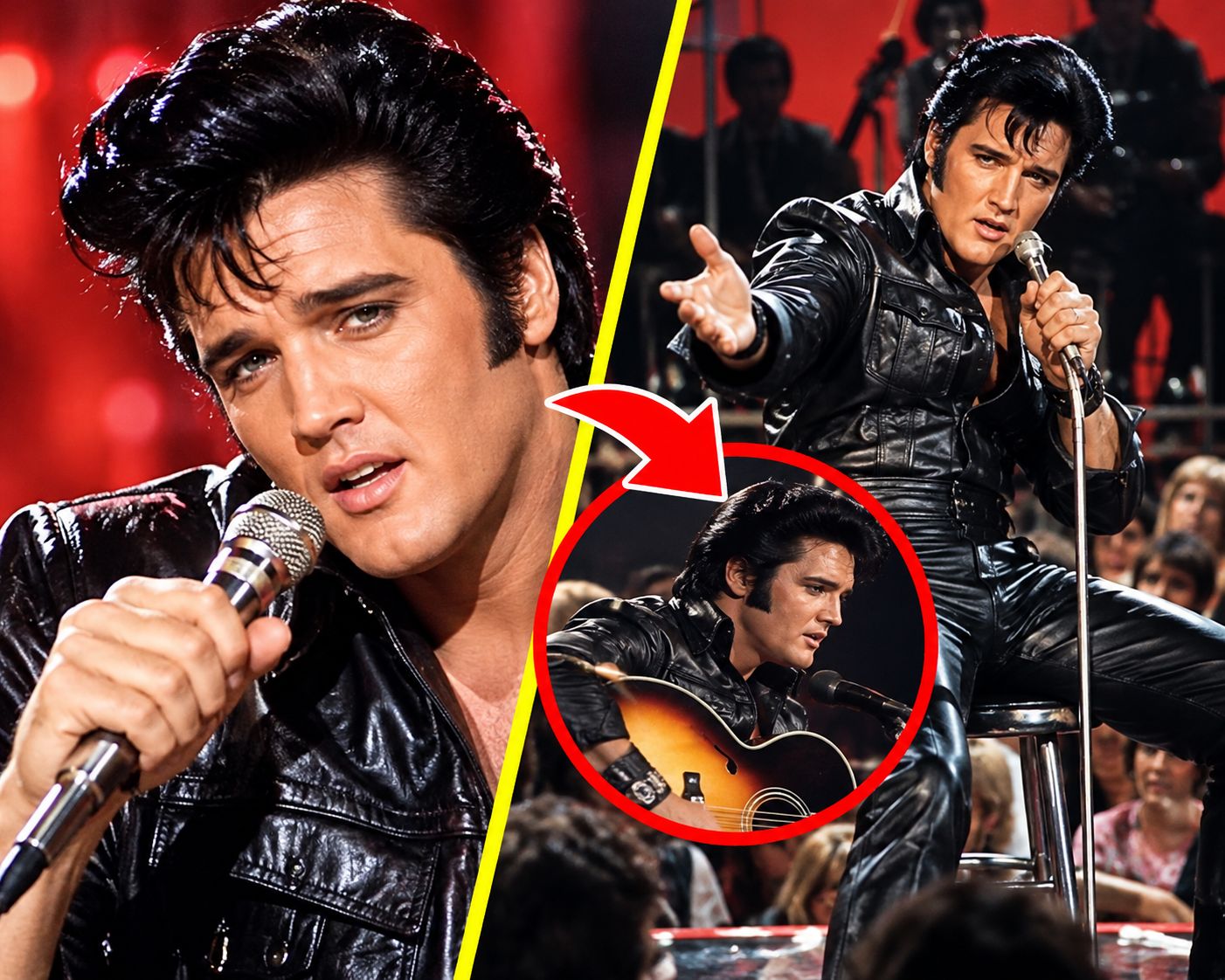
Rather than presenting only the polished image audiences had come to associate with his Hollywood years, the program allowed viewers to experience a more immediate and energetic Elvis. Dressed in black leather for his iconic solo performances, he looked confident, focused, and ready to reclaim his place in music history.
The intimate sit-down sessions were particularly memorable. Surrounded by musicians and performing in a relaxed setting, Elvis revisited his early songs, traded musical ideas, and displayed the charisma that had made him a phenomenon in the 1950s.
There was no need for elaborate movie sets or complicated storylines.
There was Elvis, his guitar, his voice, and the unmistakable energy that had first captured the world’s attention.
The greatest risk was not returning to the stage. It was allowing the world to see the performer he had always been beneath the Hollywood image.
And the result was unforgettable.
One Performance That Silenced the Doubts
When viewers watched Elvis perform, they witnessed more than a nostalgic return to an earlier era. They saw an artist reconnecting with his musical roots.
His voice carried power and emotion. His movements reflected the confidence of someone who understood exactly who he was. The chemistry between Elvis and the musicians around him brought an intimacy and spontaneity that television audiences rarely experienced from him during his movie years.
The special reminded people that Elvis was not simply a film star who happened to sing.
He was a performer.
The black leather outfit became one of the most enduring images of his career, symbolizing a return to the rebellious spirit that had helped define rock and roll. His performances of songs such as “Trouble” and “If I Can Dream” demonstrated different sides of his artistry, from raw intensity to emotional conviction.
The response helped reestablish Elvis as a major musical force and set the stage for the next chapter of his career.
For longtime fans, it was a reminder of the Elvis they had fallen in love with. For younger viewers, it was an opportunity to discover why his name had become legendary in the first place.
Why This Risk Mattered So Much
The 1968 comeback was important because it challenged the idea that an artist’s greatest years must always remain in the past.
Elvis could have continued relying on the familiarity of his movie career. Instead, he returned to a format that put his musical ability and stage presence front and center.
There was vulnerability in that decision.
A comeback invites comparison. Every movement, every note, and every moment becomes an opportunity for audiences to judge whether the magic is still there.
But Elvis did not simply imitate the performer he had been a decade earlier. He brought experience, maturity, and a renewed sense of purpose to his music.
The special showed that his talent extended beyond nostalgia. His voice could still move people, his personality could still fill a room, and his performances could still command attention.
Sometimes, the biggest turning points happen when someone is willing to step away from what feels safe and return to what made them special.
That was the significance of Elvis’s 1968 decision.
From Television Comeback to a New Era
The success of the special helped open the door to another important phase of Elvis’s career.
In 1969, he returned to live performances in Las Vegas, beginning a new chapter that would bring him before audiences in concert halls and arenas for years to come.
His comeback also coincided with a renewed focus on recording music. Songs such as “In the Ghetto” and “Suspicious Minds” demonstrated his continued ability to connect with listeners and produce memorable recordings.
The road ahead would bring both remarkable achievements and personal challenges. Nevertheless, the 1968 special remains a landmark because it captured Elvis at a moment when he was rediscovering the power of his own artistry.
It was not merely a return to the past.
It was a bridge to the future.
The Moment the King Reminded the World
Looking back, the significance of 1968 goes far beyond a black leather suit or a memorable television broadcast.
It was the moment Elvis Presley reminded the world that legends are not defined only by what they accomplished at the beginning of their careers. They are also defined by their ability to confront uncertainty, adapt to change, and find their way back to what matters most.
Elvis had already changed popular music once. With the comeback special, he demonstrated that his influence was not simply a memory preserved in old records.
He was still here. He still had something to say. And he still knew how to make people listen.
In 1968, Elvis Presley did not just return to the spotlight. He reminded the world why he had earned the title of the King of Rock and Roll.
Decades later, those performances continue to captivate audiences. The music remains powerful, the images remain iconic, and the story continues to inspire anyone who has ever wondered whether it is possible to make a comeback when the world begins to move on.
Elvis answered that question in the only way he could: by picking up his guitar, stepping in front of the cameras, and letting the music speak for itself.