 By admin
Watch the video at the end of this article.
Introduction
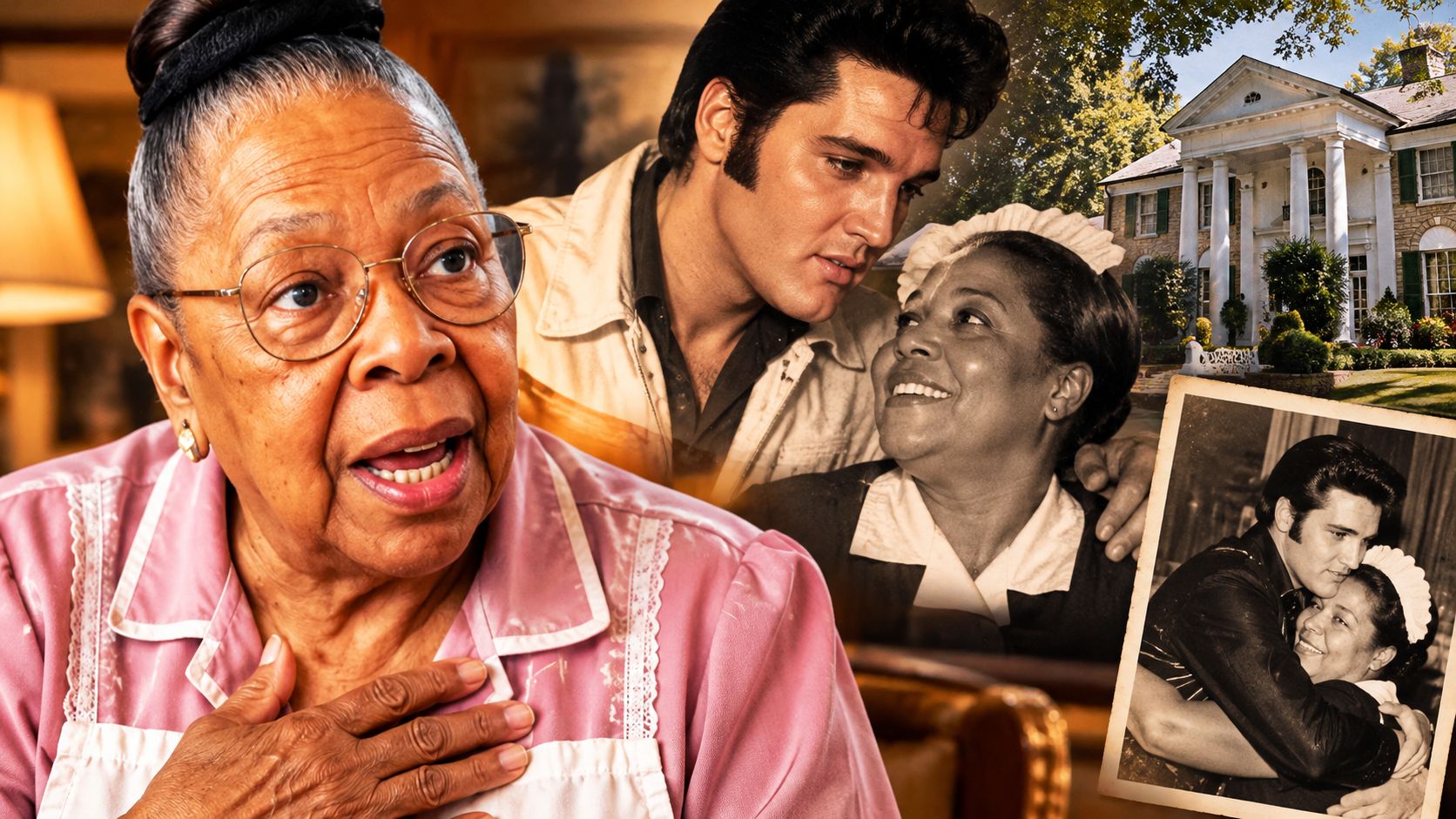
For decades, Graceland has remained one of the most famous homes in American music history. Behind its gates lived Elvis Presley, the King of Rock and Roll—a man whose voice captivated millions, whose performances changed popular music, and whose private life became the subject of endless fascination.
But while fans around the world dreamed of meeting Elvis, only a small circle of people experienced what daily life around the superstar was really like.
Imagine working inside his home, seeing the quiet moments between performances, and witnessing the difference between the man the world adored and the person who lived behind closed doors.
The world knew Elvis as a legend. But what was he really like when the cameras stopped rolling?
Over the years, stories from people who worked at Graceland have helped fans imagine the private world behind the celebrity. Their recollections have also raised an enduring question: What was life really like inside the home of the King?
Life Behind the Gates of Graceland
Graceland, located in Memphis, Tennessee, became Elvis’s home in 1957. For him, it was more than a grand residence. It was a place where he could spend time with family, welcome friends, and escape some of the pressures that came with worldwide fame.
From the outside, the property represented success and glamour. Inside, however, daily life involved ordinary routines alongside the extraordinary circumstances of living near one of the most recognizable entertainers on Earth.
Staff members helped maintain the household, prepare meals, and keep the property running. Visitors and friends came and went, while Elvis’s demanding career often required travel, rehearsals, recording sessions, and concerts.
For anyone working there, the experience must have been unlike working in an ordinary household.
Yet it is important to remember that stories about life at Graceland come from different people and different periods. Not every account attributed to former employees has been independently verified, and sensational claims should not automatically be treated as fact.
What remains fascinating is the glimpse these recollections can offer into the private environment surrounding a man whose public image was known around the world.
The Man Behind the Famous Name
Elvis Presley was celebrated for his charisma, distinctive voice, and generosity toward people close to him. Friends and associates have shared stories over the years describing his humor, his love of music, and his tendency to surround himself with familiar faces.
But the man behind the legend was also a complicated human being.
Fame brought enormous demands. Elvis’s schedule could be exhausting, public attention followed him almost everywhere, and his private life attracted constant curiosity. At Graceland, he had an opportunity to spend time away from the public eye, although the pressures of celebrity did not simply disappear when he returned home.
For people who worked alongside him, the experience could involve seeing a side of Elvis that concert audiences never witnessed.
There were moments of relaxation, conversations with friends, and the everyday routines that rarely appeared in magazines. There were also periods when the demands of his career and personal circumstances made life more complicated.
The contrast between the superstar onstage and the private individual at home is one reason his story continues to interest fans.
Behind the fame, the costumes, and the screaming crowds was a person whose life could not be understood through his performances alone.
What Did Former Graceland Employees Really Witness?
Over the decades, several people who worked at Graceland or spent time in Elvis’s household have shared memories of their experiences.
Their accounts have described different aspects of life around the singer, from household routines and interactions with visitors to his personality away from the spotlight.
Some recollections portray a warm and playful side of Elvis. Others discuss the unusual demands of working within the private world of a celebrity whose schedule and circumstances could change quickly.
These stories are valuable because they offer perspectives that differ from the familiar photographs and television appearances.
However, the claim that a particular former maid made a final revelation shortly before her death requires a verifiable name, interview, or original source before the details can responsibly be presented as established fact.
Without that evidence, it would be misleading to invent a dramatic confession or attribute unconfirmed statements to someone who may not have made them.
The genuine history of Graceland is compelling enough without adding details that cannot be substantiated.
The Challenges of Living Around a Superstar
Working in the home of a world-famous entertainer would have brought unique challenges.
Privacy was especially important. Elvis needed a space where he could relax without constantly being treated as a public figure. Maintaining that privacy required trust, discretion, and the efforts of the people who helped run the household.
The unusual nature of his life also meant that ordinary routines could be affected by professional commitments. Concert tours, recording sessions, film projects, and visitors could shape the atmosphere at Graceland from one period to the next.
For household employees, understanding those routines would have been part of the job.
At the same time, it is worth remembering that employment at Graceland did not necessarily mean every worker had a close personal relationship with Elvis. Different employees would have had different responsibilities and different opportunities to interact with him.
That distinction matters when evaluating stories about what life inside the house was actually like.
A firsthand memory from someone who regularly worked with Elvis can offer a meaningful perspective. A rumor repeated decades later may tell us more about public fascination than about the truth.
Why These Stories Still Fascinate Elvis Fans
Elvis died on August 16, 1977, at the age of 42. His death shocked the world and left millions of fans searching for ways to understand the person behind the music.
Since then, books, interviews, documentaries, and personal recollections have attempted to illuminate different parts of his life.
Why does the curiosity remain so strong?
Perhaps it is because Elvis occupied such an extraordinary place in popular culture. His performances made him seem larger than life, but his personal experiences remind us that even the most celebrated people have private struggles, relationships, and everyday moments that the public rarely sees.
Fans want to understand more than the songs. They want to know what made him laugh, how he treated the people around him, what he valued, and what life looked like when he was not standing beneath the stage lights.
Stories from former employees can help answer some of those questions, provided they are carefully examined and presented in context.
The most meaningful accounts are not necessarily the most shocking. Sometimes, a small detail about an ordinary day can reveal more about a person’s character than a dramatic headline ever could.
The Final Years and the Legacy He Left Behind
During the final years of his life, Elvis faced significant health challenges while continuing to perform for his devoted audiences.
His personal circumstances were complex, and the full story of those years cannot be reduced to a single explanation or a collection of rumors.
Onstage, he remained a powerful presence in American music. Away from the audience, he lived a life shaped by the demands of celebrity, his relationships, and the realities of his health.
He died at Graceland in Memphis in 1977, leaving behind a musical legacy that continues to inspire new generations.
Today, Graceland attracts visitors who want to connect with his history. For many, walking through the property is an opportunity to imagine the person behind the legend and reflect on the life that unfolded there.
The house preserves a connection to Elvis, but the stories told by those who knew or worked around him also contribute to how people remember him.
Each firsthand account adds another perspective. Together, carefully considered, they help paint a more complete picture of a man whose life was both extraordinary and deeply human.
The Truth Behind the Legend
Perhaps the most important lesson in exploring Elvis’s private life is that the truth is often more complicated than a headline suggests.
The King of Rock and Roll was an international superstar, but he was also a person who needed privacy, companionship, and time away from public expectations.
Those who worked at Graceland occupied a unique position. They may have witnessed moments that fans could never see, but their experiences were not all the same, and their stories deserve to be understood in their proper context.
A verified recollection from someone who was actually there can help preserve an important piece of history. An unverified claim, no matter how dramatic, should not be confused with a documented revelation.
Elvis Presley left behind more than legendary songs. He left behind a life that continues to inspire questions, memories, and a desire to understand the man beyond the music.
Perhaps that is why the stories of Graceland still draw so much attention. Behind those gates was not simply a celebrity’s home, but the private world of a man whose influence reached millions.
And the more carefully we explore that world, the better we can understand the person behind the crown.