 By admin
Introduction
Elvis Presley could command an entire arena with a single song. Millions of fans screamed his name, the lights followed his every move, and his voice became one of the most recognizable sounds in music history. But behind the dazzling performances and the image of the King of Rock and Roll, there was a much more complicated story—one that unfolded far away from the cheering crowds.
The man who seemed to have everything was fighting battles that the world could never fully see.
Elvis Aaron Presley was born on January 8, 1935, in Tupelo, Mississippi. From humble beginnings, he rose to become a cultural phenomenon whose influence transformed popular music. His energy, distinctive voice, and unforgettable stage presence made him a superstar unlike any other.
Yet fame came with a price.
As the years passed, the demands of performing, constant public attention, and the pressure to maintain his extraordinary career placed enormous weight on his shoulders. While audiences saw the confident entertainer who could electrify a room, the people closest to him sometimes witnessed a more vulnerable side of the man behind the legend.
The Price of Becoming the King
During the 1950s and 1960s, Elvis became one of the most celebrated entertainers in the world. His songs dominated the charts, his movies attracted enormous audiences, and his appearances became major cultural events.
But success did not mean life became easier.
The expectations surrounding Elvis grew with every passing year. Fans wanted more music. Studios wanted more movies. Concert audiences wanted the unforgettable performances they had come to expect. Behind the scenes, the machinery of celebrity continued moving, leaving little room for an ordinary, private life.
For someone whose career depended on being constantly visible, finding peace away from the spotlight could be difficult.
Graceland, his home in Memphis, Tennessee, became an important refuge from the outside world. Behind its gates, Elvis could spend time with family, friends, and members of his inner circle. It was a place where he could step away from the public image that had followed him throughout his life.
But even at home, the pressures surrounding his health, career, and personal circumstances did not simply disappear.
The Struggles Fans Could Not See
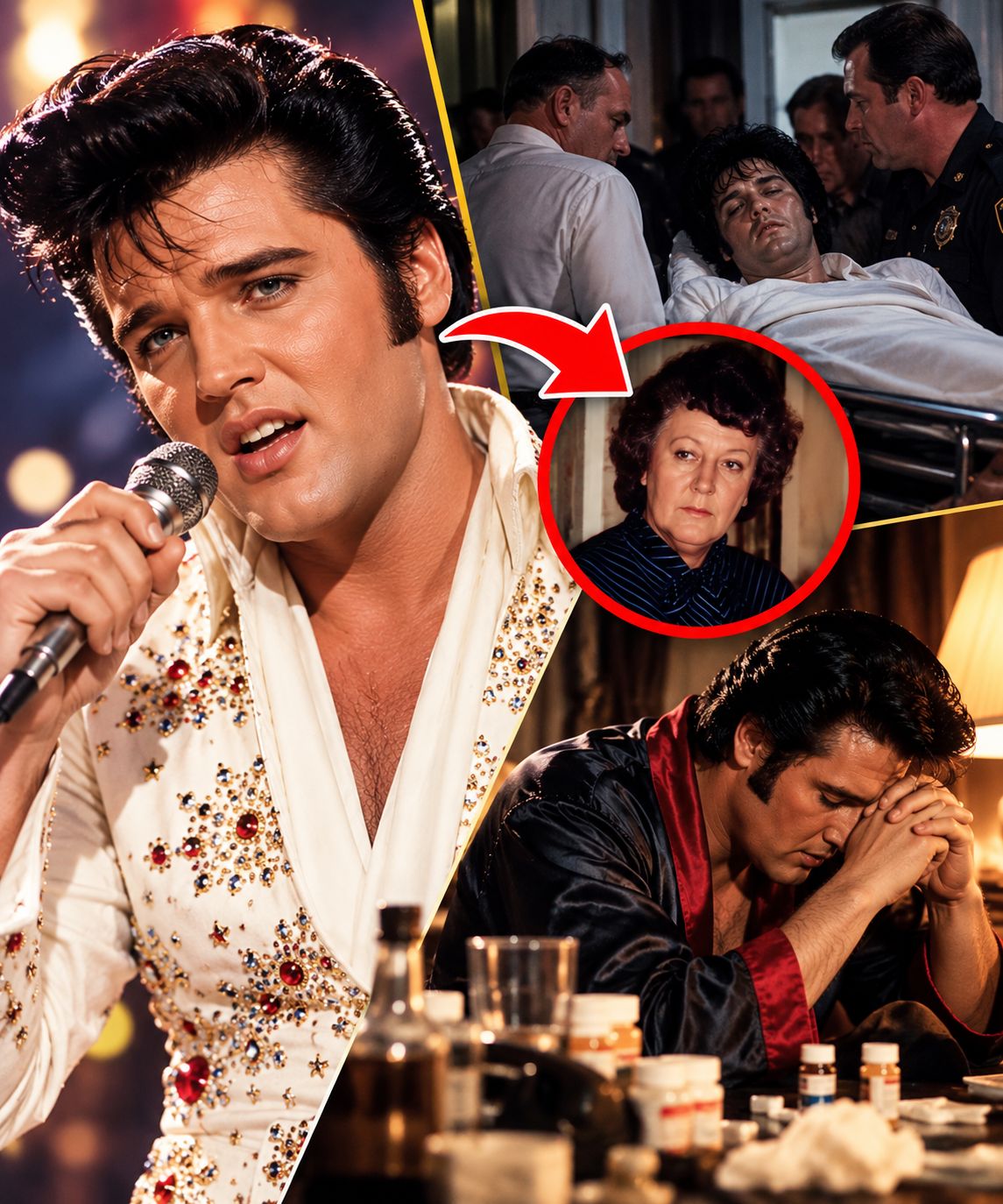
By the 1970s, Elvis was facing serious health challenges. His demanding schedule, changing physical condition, and reported struggles with prescription medications became part of the difficult final chapter of his life.
It is important to remember that the private details of his experiences were not always fully understood by the public. Stories about Elvis have circulated for decades, and not every claim repeated about his personal life can be independently verified.
What is clear is that the final years of his life were far more complicated than the glamorous image many fans remember.
Onstage, Elvis could still create moments of extraordinary emotion. His voice carried the weight of experience, and his performances reminded audiences why he had become a legend. But a powerful performance could not tell the whole story of what someone was experiencing away from the audience.
Sometimes, the person who brings happiness to millions is struggling with problems that applause cannot solve.
That contrast is part of what makes Elvis’s story so deeply moving. He was not simply an icon frozen in photographs or a voice preserved on old records. He was a human being whose achievements existed alongside real difficulties, uncertainties, and personal struggles.
Behind the Doors of Graceland
To many fans, Graceland represents much more than a famous residence. It is a place connected to Elvis’s family, memories, music, and final days.
Yet the privacy surrounding his home has also encouraged endless speculation about what happened behind its doors.
Over the years, numerous accounts have attempted to describe the atmosphere inside Graceland during Elvis’s final period. Some focus on his health, others on his relationships, and still others on the people who surrounded him.
Separating documented facts from rumors is essential when revisiting such a personal chapter of his life.
Elvis died at Graceland on August 16, 1977, at the age of 42. His death shocked the world. Fans who had grown up listening to his music suddenly had to confront the loss of an artist whose voice had accompanied so many important moments in their lives.
The questions that followed reflected not only curiosity but also grief. People wanted to understand what had happened to someone who had seemed larger than life.
But the deeper lesson is not found in sensational rumors or unverified stories. It lies in recognizing the distance that can exist between a public image and a person’s private reality.
The Battle Behind the Legend
Perhaps the most heartbreaking part of Elvis’s story is that his extraordinary success could not protect him from every difficulty.
He had fame, wealth, devoted fans, and a place in music history. He could walk onto a stage and make thousands of people feel as though he were singing directly to them. Yet those achievements did not make him immune to the challenges of being human.
His story reminds us that public admiration cannot tell us everything about someone’s life. A smile does not reveal every worry. A standing ovation does not guarantee peace. And even the brightest spotlight cannot illuminate every struggle taking place behind closed doors.
Elvis Presley left behind a musical legacy that continues to reach new generations. His recordings remain beloved, his performances are still watched around the world, and his influence can be heard in countless artists who followed him.
But remembering Elvis should mean more than celebrating the King who ruled the stage.
It should also mean acknowledging the person who lived beyond it.
A Legacy That Still Touches Millions
Nearly five decades after his death, Elvis continues to inspire conversations about music, fame, vulnerability, and the pressures of public life.
For longtime fans, his songs can bring back memories of childhood, first loves, family gatherings, and moments that seemed ordinary at the time but became precious with age.
His legacy endures because there was something deeply human in his music. Beneath the spectacle, the costumes, and the legendary performances, listeners could hear longing, tenderness, heartbreak, and hope.
Perhaps that is why his story still matters today.
The world remembers the man who ruled the stage. But behind the fame was a human being whose life was not always as effortless as it appeared.
Elvis Presley may have been the King of Rock and Roll, but even a king could face battles that fame alone could never win.
And that is the part of his story we should never forget.
Video:
Elvis Presley – What Really Killed Him? | Mental Health History Documentary